
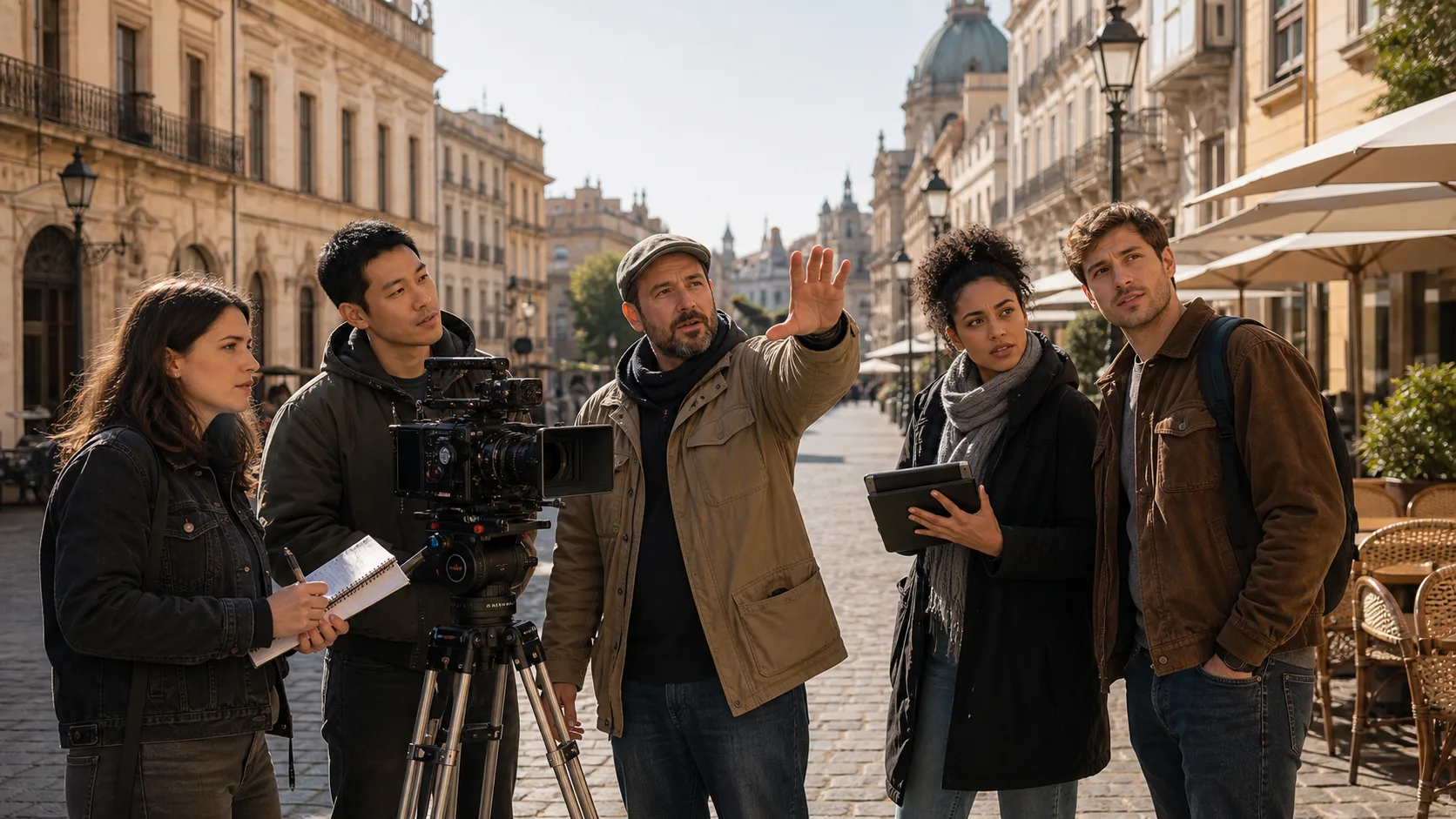
Start with the Cities That Will Shape Your Work
Choosing where to study filmmaking means choosing more than a classroom. You are also choosing the streets you walk, the light you notice, the languages you hear, the buildings that fill your frame, and the creative conversations around you. Those details can quietly shape what you write, photograph, and film every day.
That is why we encourage prospective students to treat location scouting as part of their school search. Course titles matter, as do practical assignments and degree options. Still, the city outside class can become a lasting creative influence. A train station may suggest a character. A rainy afternoon may change the mood of a short scene. A gallery, cinema, or public square may give you a new way to think about an audience.
Founded in 1972, ESRA has campuses in Paris, Nice, Cannes, Rennes, Brussels, and New York, and its Bachelor and MFA programs in France are recognized by the French Ministry of Higher Education, Research and Space. Film students learn through making, observing, collaborating, and responding to the world around them.
Together, our six campuses give you a useful starting point when thinking about the environment that may best fit your creative interests and professional direction.
It helps to begin this research early. As you weigh study options for a future academic cycle, look beyond brochures and course descriptions. Start asking what each city might teach your eye.
Choose Film Schools in Europe Through a Location Lens
When you compare film schools in Europe, think of each city as an extension of the education itself. The setting affects the visual references available to you, the stories you overhear, the pace of daily life, and the kinds of places that may stay in your memory long after a shoot is finished.
A city can influence filmmaking in simple but meaningful ways. Dense streets may inspire stories about chance meetings, movement, or isolation in a crowd. Open coastal views can change how you think about color, weather, and scale. A place with a strong arts culture may lead you toward screenings, exhibitions, and conversations that challenge your usual taste.
The goal is not to find one perfect film-school city. Instead, we recommend looking for the campus and environment that fit the kind of filmmaker you are becoming. Your favorite films can offer clues. So can the subjects you return to when you write, the images you save, and the places where you feel most alert.
As you research locations, consider asking:
- What kinds of streets, public spaces, natural settings, and architecture could influence my work?
- Does the city connect with the genres and visual styles I enjoy most?
- How close do I feel to cinemas, cultural events, creative communities, and everyday stories?
- Would this environment challenge my usual way of seeing?
- How does this location relate to the career direction I hope to explore?
Students interested in urban drama may feel drawn to a fast-moving city full of layered neighborhoods and passing faces. Someone who loves travel stories, natural light, fashion imagery, documentary work, or festival culture may have different priorities. Neither approach is better. The important part is making the choice with intention.
See How Each City Expands Your Visual Vocabulary
Film language grows through attention. Before you learn to control a frame, you have to notice what makes a frame interesting. That might be the pattern of shadows on a wall, the way people move through a market, or the contrast between old stone and modern glass.
Paris offers a powerful setting for students interested in cinematic history, architecture, art, fashion, and street life. French cinema continues to influence filmmakers around the world, and Paris gives students many chances to think about how a city becomes part of a film’s identity. Its avenues, smaller side streets, museums, cafés, and changing neighborhoods can all prompt questions about character, atmosphere, and point of view.
Nice brings a different set of references. Its Mediterranean setting, distinctive light, and coastal locations can encourage close observation of how weather, color, geography, and time of day affect a film’s mood. For filmmakers, light is never just background. It can shape production design, costume choices, camera placement, and the emotional feeling of a scene.
Cannes invites another kind of attention. Its proximity to the Cannes Film Festival makes it a meaningful place to consider what happens after a film is made. Festival culture can open wider conversations about international cinema, audiences, distribution, programming, and public release. A finished film still needs to meet viewers, and Cannes is a useful reminder that filmmaking includes that relationship.
Rennes is close to regional festivals such as the Dinard British Film Festival and Travelling, and the campus has a partnership with Sciences Po Rennes. Brussels and New York add further perspectives on urban rhythm, language, culture, and creative industries. We encourage you to research the character of each location rather than assuming every film-school city offers the same experience. A place can feel very different depending on how you move through it, what you notice, and the stories you want to tell.
Connect Location to Professional Film Culture
Making films involves more than cameras, scripts, sets, and editing rooms. It also involves audiences, cinemas, festivals, screenings, conversations, and the many paths a finished project can take. Location can help you become more aware of that larger film culture while you are still learning your craft.
Cannes is a strong example. The Cannes Film Festival is associated with international visibility and conversation around film. For emerging filmmakers, that atmosphere can make big questions feel more immediate: Who is a film for? How is it presented? What makes a project stand out? How do programmers, distributors, filmmakers, critics, and audiences respond to work?
Those questions do not have one simple answer. Yet they belong in a filmmaking education because they help students see film as both an art form and a public experience. Watching how people discuss films can sharpen your own ability to explain your creative choices.
An international environment adds another layer. In an international classroom, you may work with peers who bring different cultural references, storytelling traditions, and creative ambitions into the room. A scene that feels familiar to you may read differently to someone else. That exchange can lead to stronger collaboration and more thoughtful choices on productions that cross borders and cultures.
Graduates with a Bachelor’s degree who want to study in the United States can explore the one-year filmmaking program in New York.
Compare Film Schools Beyond the Classroom
Hands-on training becomes more meaningful when you can connect technical practice with close observation of the city around you. A directing exercise may lead you to think about public space. A cinematography assignment may make you notice changing daylight. A writing project may begin with a sound, a face, or a local detail that stays with you.
That is why comparing film schools in Europe should include both the course and the context. The right program should support practical filmmaking while giving you room to develop your own creative voice. The right location should offer material that makes you want to keep looking.
A useful comparison can include:
- Whether English-taught study options fit your learning goals
- Degree-granting status and the details of the program you are considering
- The balance between filmmaking theory and production practice
- The school’s international perspective and student community
- The campus setting and its connection to your creative interests
Program details matter. Not every program is available at every campus, so it is wise to review official information carefully before making assumptions. Consider the type of learning environment you want, the production work you hope to complete, and the application materials you may need to prepare.
Admissions conversations can also help clarify questions about programs and applications. Bring specific questions rather than relying on broad impressions. Ask how students balance theory with production practice, what the learning environment feels like, and what materials are required for the program that interests you. Clear questions lead to clearer decisions.
The right location is not necessarily the most famous one. It is the place that makes you more observant, more curious, and more willing to test new ideas. City streets, cultural landmarks, screenings, festivals, and ordinary daily routines can all become part of your education when you pay attention to them.
Turn Your Creative Goals Into A Clear Next Step
Compare our programs and campuses, then request a brochure. If you have questions along the way, contact us.
FAQs
Why Does Location Matter When Choosing A Film School?
Location matters because a city affects what you observe during your studies. It can shape the stories that catch your attention, the visual references you develop, and the cultural conversations you encounter outside class.
We see location as part of the creative process. The architecture around you, the pace of public life, the weather, the language, and the local film culture can all influence how you think about mood, character, image, and audience.
Should I Choose A Campus Based Only On Its Famous Film History?
Film heritage can be a meaningful factor, especially if you are interested in the history and continuing influence of cinema. However, it should not be your only factor. Your own creative interests, preferred learning environment, and the specific program you want to pursue matter just as much.
A famous city may inspire you, but a strong choice also depends on whether you can picture yourself learning, collaborating, and making work there. Consider what kind of environment helps you stay curious and productive.
What Should I Compare Among Film Schools In Europe?
Start with the program itself, including English-taught options, degree status, practical filmmaking opportunities, international perspective, campus setting, and application requirements. Then look at the city through a creative lens.
We recommend comparing how each school balances theory and production practice, as well as the kind of student community and visual environment that may surround your studies. Confirm official program information carefully, since availability can differ by location.
How Can I Learn Which ESRA Location Is Right For Me?
Official program pages and brochures can help you understand program details and application information. It is also helpful to compare the creative character of each city, from Parisian street life and Nice’s Mediterranean light to Cannes festival culture, Rennes with regional festivals such as Travelling, and the distinct perspectives found in Brussels and New York.
Admissions can answer questions about programs and applications. The most useful research begins with an honest look at the stories you want to tell, the places that influence you, and the environment where you can keep developing your eye.
