Studying filmmaking abroad can give you more than a new classroom. It can place you closer to different film cultures, creative traditions, audiences, and industry conversations, while you build a clearer view of filmmaking beyond your home market. At ESRA International Film School, we are a degree-granting institution founded in 1972, with six campuses in Paris, Nice, Cannes, Rennes, Brussels, and New York.
Why Festival Awareness Matters for Emerging Filmmakers
Festivals are part of that wider view. They show how films move from an idea and production plan to premieres, critics, distributors, audiences, and cultural discussion. For emerging filmmakers, paying attention to that path can make creative choices feel more connected to the real life of a project.
Location can shape the way you see stories. When you study film abroad, you may find yourself surrounded by unfamiliar visual references, languages, architecture, local histories, and ways of telling a story. Europe and New York each bring their own filmmaking traditions, and learning across these settings can help you question habits that once felt automatic.
How Location Shapes Your Creative Vision: Cannes vs. Nice
Our Cannes campus offers a useful perspective for students interested in the professional conversations around cinema. Its proximity to the Cannes Film Festival places students close to the international audiences, sales and distribution conversations that surround a film’s public life. A project does not simply arrive in front of viewers. It is introduced, discussed, positioned, promoted, and considered within a larger industry context.
Nice has a different identity and creative strength. Its Mediterranean setting, distinctive light, and coastal locations can spark visual ideas for filmmakers who are thinking about atmosphere, color, movement, and place. Cannes and Nice are separate campuses, and each can encourage a different kind of creative attention. Rennes is close to regional festivals such as the Dinard British Film Festival, Travelling, and Court Métrange, and the campus has a partnership with Sciences Po Rennes.
You do not need to attend a festival to learn from a festival-aware education. Following programming announcements, trailers, reviews, premieres, filmmaker interviews, and industry news can help you notice how films are presented to the world. It can also help you ask better questions about your own work.
- What story is this film telling, and who might connect with it?
- How does its trailer introduce the tone, genre, and audience?
- What creative choices stand out in the editing, sound, casting, or visual style?
- How is the film being discussed by critics, viewers, and industry professionals?
Connecting Storytelling, Production, and Industry Positioning
Festivals sit at the meeting point of art and career planning. A filmmaker may begin with a personal idea, but choices made during development and production can affect how a project is understood later. Genre, runtime, casting, editing rhythm, language, target audience, and possible distribution paths can all influence how a film is positioned.
That does not mean every project should be designed to chase recognition. Festival selection is never guaranteed, and creative work should not become a checklist. Still, understanding the ecosystem can help you think with more intention. You can consider what your film is trying to say, who you want to reach, and how its form supports its purpose.
Festival lineups can become an informal learning tool. When you watch selections from different countries, you can compare storytelling approaches without assuming there is only one “right” way to make a film. Some films may move slowly and leave space for reflection. Others may use sharp pacing, direct dialogue, or bold sound design. Some may be rooted in a local setting but speak to viewers far beyond it.
Pay attention, too, to how emerging filmmakers introduce their work. A short description, a poster, a premiere conversation, or an interview can reveal how filmmakers frame their intentions. These small details can help you understand the difference between making a film and presenting it.
When you study film abroad, you have a chance to observe how films travel across borders, languages, and viewing contexts. That perspective can return with you to practical work in meaningful ways. A class exercise, short film, or collaborative production can become an opportunity to think about audience, tone, and presentation from the beginning.
Hands-On Experience and Multicultural Collaboration
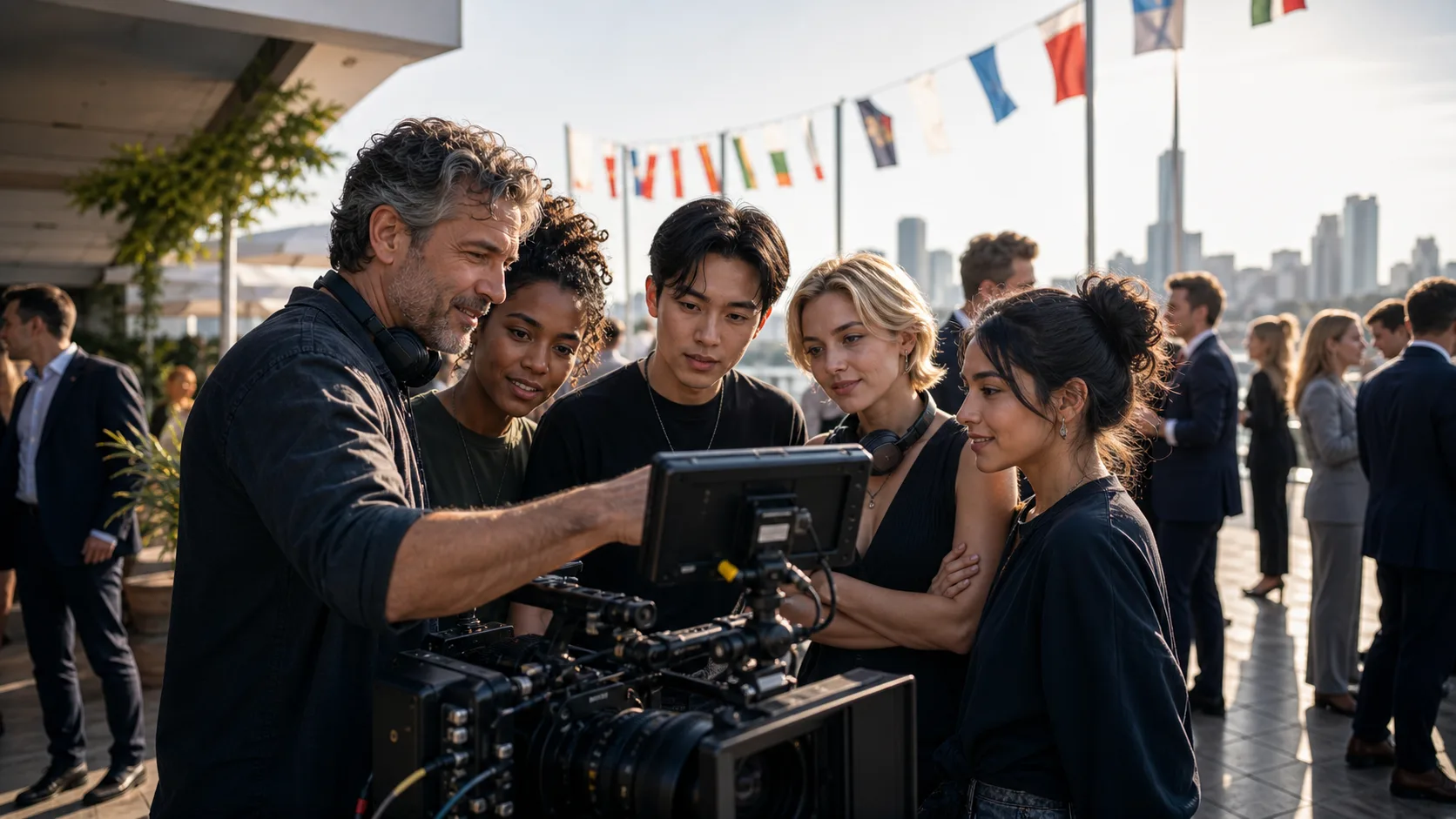
Hands-on filmmaking is where these observations become useful. Film is collaborative by nature, and a production asks you to turn ideas into clear plans, communicate with others, solve problems under pressure, and reflect on what worked once the work is finished. Our English-taught filmmaking study-abroad programs are designed around practical learning, so students can connect creative thinking with the real process of making films.
Across our campuses, students may work beside peers with different cultural references and creative influences. One person may respond strongly to performance, while another is focused on visual composition, pacing, or sound. Those differences can make collaboration more thoughtful. They can also remind you that viewers do not all bring the same expectations to a screen.
A stronger international perspective is not about copying another country’s style. It is about becoming more curious about the choices behind it. You may begin to notice how a location changes a scene, how language affects rhythm, or how cultural context shifts the meaning of a gesture. These observations can make your own work more specific and more open to audiences outside your usual circle.
Practical production work also teaches habits that matter in any setting:
- Develop ideas that can be communicated clearly to collaborators.
- Plan productions with creative goals and real-world limits in mind.
- Listen closely when teammates bring different references and viewpoints.
- Review finished work with honesty, then apply what you learned to the next project.
For international students, English-language learning in Europe can make it easier to focus on filmmaking while gaining experience in a new environment. For US-based students, our New York campus provides a way to connect with our international identity while studying in the United States. In both cases, the larger value comes from seeing filmmaking as a shared practice that crosses borders and invites exchange.
Throughout the year, festivals bring attention to premieres, awards conversations, international releases, and new programming. For prospective film students, that attention can be a useful prompt. Rather than only asking which films are getting noticed, ask what kind of filmmaker you want to become and what you want your work to do.
Building Year-Round Festival Viewing Habits
A festival-informed mindset can grow throughout the year, not only during high-profile events. Start with a viewing practice that reaches beyond familiar titles, recommendations, and algorithms. Make room for films from countries you have not explored before, as well as shorts, documentaries, animation, and stories made in different languages.
Keeping notes can make your viewing more active. You do not need to write formal reviews. A few honest observations can help you recognize patterns in your own taste and sharpen your creative instincts.
- Notice how cinematography shapes mood and point of view.
- Listen for the role sound plays in building tension or intimacy.
- Track pacing, structure, and the moments when your attention shifts.
- Consider how performances change the emotional meaning of a scene.
- Reflect on why a film may connect differently with different audiences.
Reading festival coverage and filmmaker interviews can add another layer. You may learn why a director chose a certain format, how a production came together, or what questions a film hopes to raise. Comparing posters and trailers can also show how marketing creates expectations before anyone sees the finished work.
These habits matter because filmmaking is not only about technical skill. It is also about attention. The more carefully you watch, discuss, and reflect, the more material you have to bring into your own writing, directing, shooting, editing, and collaboration. International study can provide a setting where global viewing habits, creative experimentation, and practical production work inform one another.
Turn Festival Insight Into Your Next Film Project
At ESRA International Film School, our English-taught, hands-on programs give you space to develop your voice through real production work and an international perspective. Explore our filmmaking programs to build practical experience for your future in filmmaking. If you have questions about programs or applications, request a brochure or contact us to start the conversation.
Questions About Studying Film Abroad
Why Does Festival Awareness Matter For Film Students?
Festival awareness helps you understand the wider life of a film. A finished project may meet audiences, critics, programmers, distributors, collaborators, and cultural conversations that shape how it is received. By paying attention to these relationships, you can see that filmmaking includes both creative expression and thoughtful presentation.
We encourage students to treat festivals as places to observe rather than as a promised outcome. Watching how films are selected, discussed, and introduced can help you think more clearly about your own long-term creative goals.
Can I Study Filmmaking In English While Living Abroad?
Yes. We offer English-taught filmmaking study-abroad programs designed for international students. Learning in English can help you take part in creative discussions, collaborate with classmates, and focus on practical filmmaking in an international setting.
Program details can change, so we recommend reviewing current information carefully before applying. This helps you choose an option that matches your interests, goals, and preferred learning experience.
Is An International Film Education Useful For Students Interested In New York?
Yes. Students interested in New York can still benefit from an international perspective on storytelling, collaboration, and audiences. Film work often brings together people with different creative references, and learning to communicate across those differences can be valuable wherever your career takes you.
If New York is your goal, explore our one-year filmmaking program in New York, which has its own page with program details.
Do I Need Festival Experience Before Applying?
No. You do not need prior festival experience to begin studying filmmaking. Curiosity, commitment to storytelling, and a willingness to learn through practical work are strong starting points.
A useful first step is to watch widely and pay attention to what moves you. Notice the films that stay with you, then ask why. That habit can help you arrive ready to learn, collaborate, and develop your own voice.
Who Can Answer Questions About ESRA Programs And Applications?
Our admissions team can answer questions about available programs and the application process. As you compare options, focus on the learning environment that will help you turn curiosity into practical work.
Festival awareness can widen the way you see filmmaking, but consistent viewing, collaboration, and production experience are what help that awareness become part of your own creative practice.
